Shut, Not Shambolic: Auditing the Copy That Keeps Customers When You're Closed
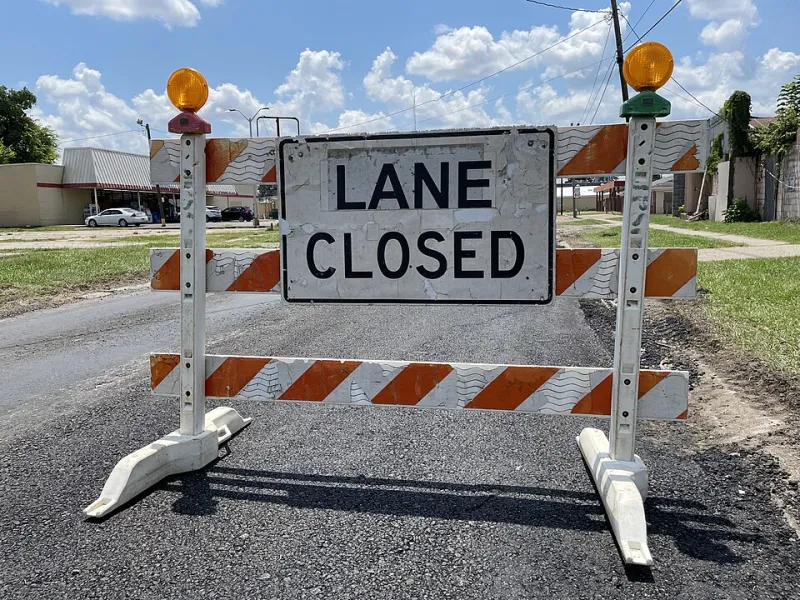
Photo: Ktkvtsh, CC BY 4.0, via Wikimedia Commons
Somewhere on your website, there is a sentence that tells people when you are open. It was probably written by someone who has since left, and it has not been read by anyone since. That sentence is doing more work than you think.
Opening hours, bank holiday notices, temporary closures and out-of-office messages sit in the gap between operations and marketing. They are rarely briefed, rarely tested and almost never audited. Yet they appear at exactly the moment a customer is deciding whether to bother with you. A vague notice does not just inconvenience them. It tells them something about how you run the place.
The notice nobody owns
Closure copy usually belongs to everyone and no one. Operations knows the dates. Marketing owns the website. Customer service fields the questions. The result is a sentence like 'Please bear with us during this busy period' — a phrase that has been copied between businesses for so long that it has stopped meaning anything.
The audit starts by accepting that closure copy is conversion copy. It is not admin. It is the last thing a customer reads before they decide to wait, book, buy elsewhere or forget you entirely.
Three ways closure copy fails
The fog. 'Please bear with us' is a feeling, not information. Bear with you until when? Busy doing what? Should I come back tomorrow or next month?
The apology loop. 'We're sorry for any inconvenience this may cause.' It says sorry three times and never says what is happening. Apologies are fine. They are not a substitute for a date.
The dead end. 'We are currently closed.' Full stop. No reopening date, no alternative route, no next step. The customer is left standing outside a locked door with no idea whether to wait or walk away.
Test one: can a stranger act on it?
Read your closure notice as if you have never heard of your business. Can you answer three questions? What is closed, for how long, and what should I do instead? If not, rewrite it.
Before: 'We're taking a short break! Please bear with us — normal service will resume soon.'
After: 'We're closed from Friday 21 August to Monday 31 August for our summer break. Orders placed after 3pm on Thursday 20 August will be dispatched on Tuesday 1 September. You can still browse the shop and email [email protected] — we'll reply from 1 September.'
The second version is longer, but it is the shorter read. It answers the question before the customer has to ask it.
Test two: does it name a date, not a vibe?
'Normal hours' is not a day. 'Soon' is not a date. 'After the bank holiday' assumes everyone knows which bank holiday and that your customer is in the UK, which they might not be.
Name the day. Name the time. If you sell abroad, name the time zone. If the reopening date is uncertain, say when you will update the notice. 'We'll confirm the reopening date here by Friday 5pm' is infinitely more reassuring than 'we'll be back soon'.
UK bank holidays are a particular trap because they are predictable and still somehow catch businesses out. 'Closed for the bank holiday' is fine if there is only one, but August has one, Christmas has several, and the calendar differs in Scotland. Write the date, not the occasion. 'Closed Monday 31 August' beats 'closed for the August bank holiday' every time.
If you are open, say so loudly. Plenty of businesses lose trade on bank holidays because their website still says 'normal hours' and the customer assumes normal means closed.
Test three: does it route them somewhere useful?
Closure copy should not be a full stop. It should be a handoff. If you cannot take orders, can they browse? Can they book a call for the day you return? Can they read the FAQ that answers the question they will otherwise email you about?
A good closure notice reduces support queries because it answers them before they are sent. Add one clear next step: 'Book a call for the week commencing 7 September' or 'Email us and we'll reply on the first day back.'
Out-of-office: the email equivalent of a shrug
The same rules apply to out-of-office messages. 'I'm away from my desk with limited access to email' is the business equivalent of 'please bear with us'. It tells the sender nothing.
Better: 'I'm out of the office until Tuesday 1 September. For anything urgent, contact [name] on [email]. I'll reply to everything else when I'm back.' That is four sentences and it prevents three follow-up emails. If you are a solo business, you can still give a date and an alternative route. You do not need to apologise for having a life.
A twenty-minute audit
List every place a customer can learn when you are open: homepage banner, contact page, Google Business Profile, social bios, email footer, voicemail, out-of-office, order confirmation, delivery page. Check each one against the three tests above.
Delete 'please bear with us' wherever it appears. Replace 'soon' with a date. Add a next step. Then ask someone outside the business to read the main notice and tell you what they think it means. If they hesitate, you have your answer.
Closed is fine. Vague is not.
Being closed is not a brand failure. Being unclear about it is. The businesses that keep trust during a closure are not the ones with the most elaborate apology. They are the ones that treat the notice like any other piece of conversion copy. They answer the question, they give a date, and they leave the door open in the only way that matters when the physical door is shut: with words that tell the customer exactly what happens next.